


Solar Tracking System
Turkey's First IEC 62817 Certified Domestic Solar Tracker
What Is a Solar Tracking System?
A solar tracking system (solar tracker) is an intelligent mechanical and software system that continuously orients solar panels to face the sun at the optimal angle throughout the day. OxoTracker is Turkey's first and only domestically developed solar tracking system certified to IEC 62817.
15–25%Annual energy increase
2–3×Morning/evening output
IEC 62817First certified in Turkey
10+ yearsSector experience
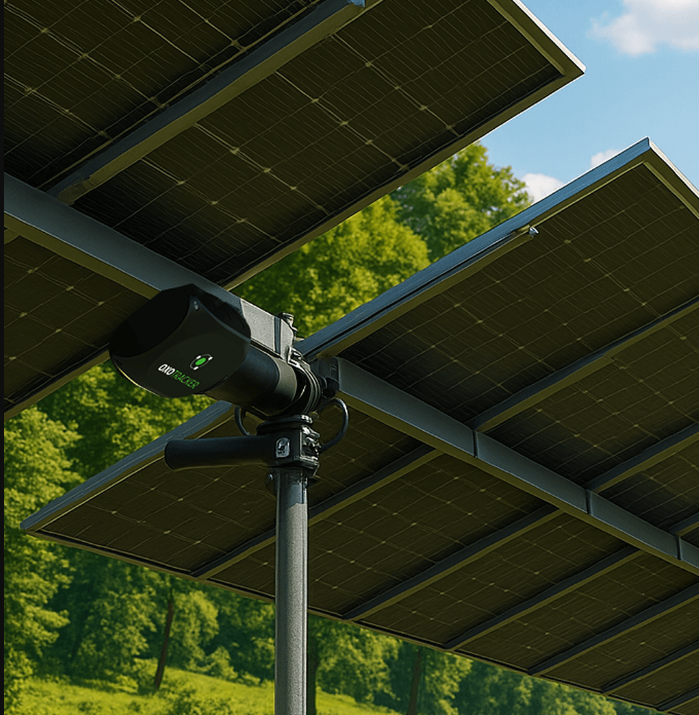
While fixed-tilt panels operate at peak efficiency only around solar noon, a solar tracking system maximises energy capture from sunrise to sunset by keeping panels perpendicular to incoming solar radiation at all times.
The angle at which sunlight reaches the Earth's surface changes constantly — influenced by seasonal tilt, geographic latitude, and Earth's rotation. OxoTracker's astronomical algorithm calculates these variables in real time based on GPS location and time, autonomously adjusting panel angles without any external sensor — just like a sunflower tracking the sun, every moment, in every condition.
How Much Energy Gain Does a Solar Tracker Provide?
- 15% to 25% increase in annual energy production
- 2–3× higher output in morning and evening hours compared to fixed systems
- More balanced daily generation profile — ideal pairing with battery storage systems
- Faster return on investment (ROI)
Fixed System vs Solar Tracking System
| Fixed System | OxoTracker | |
|---|---|---|
| Annual energy output | Baseline | 15–25% more |
| Morning / evening output | Low | 2–3× higher |
| Daily production profile | Narrow peak, uneven | Wide, balanced |
| Return on investment (ROI) | Standard | Shorter payback |
| Storage compatibility | Moderate | Excellent |
| Weather protection | None | Auto stow (storm/hail) |
Deploying a solar tracking system in utility-scale solar projects improves investor profitability and reduces grid balancing costs. Given Turkey's high solar irradiation potential, the production differential can reach hundreds of MWh annually.
How Does the OxoTracker Solar Tracking System Work?
OxoTracker is a single-axis horizontal solar tracking system that operates on an astronomical calculation method. Without relying on external sensors, it computes the sun's real-time position through mathematical modelling based on geographic coordinates and local time, then automatically aligns panels accordingly.
Web-Based Monitoring and Control Software
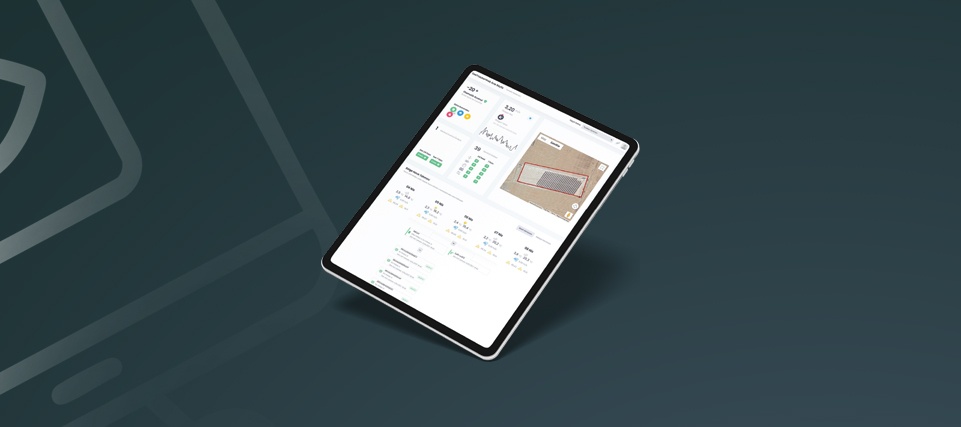
OxoTracker's monitoring software provides live data streaming, automatic wind and weather scenarios, remote monitoring and control, and detailed alarm management for single-axis solar tracking systems.
- SCADA integration — API with IoT & third-party platforms
- PV performance monitoring, trend analysis, and reporting
- O&M optimisation for lower total cost of ownership
- Seasonal shading optimisation for Agri-PV sites
Core System Components
Smart Control UnitIEC 62817-certified domestic electronic control board. Tested in Spain over 6 months across 20+ reliability assessments.
Astronomical AlgorithmSun coordinates calculated from location, date, and time. Fully sensor-free, autonomous operation.
LockBolt ConnectionNo lifetime torque control required. Minimises maintenance costs and maximises mechanical reliability.
LiFePO4 BatteryOperates between −20°C and +60°C. Ensures safe stow positioning even during grid outages.
Why Choose OxoTracker Solar Tracking System?
Turkey's First IEC 62817 Certified Solar Tracking System
OxoTracker is Turkey's first and only domestically developed solar tracking system to achieve IEC 62817 certification for its electronic components — validated at an independent laboratory in Spain through functional, UV, static load, thermal deformation, vibration, and impact tests.
- Structural resistance to 60–100+ km/h winds
- Electronic stability between −20°C and +60°C
- Auto stow positioning during snow, hail, and storms
- Mechanical design validated by CFD and structural analysis
Ready for Storms, Hail, and Snow
OxoTracker automatically moves to a safe stow position in adverse weather conditions, protecting your panels. The LiFePO4 battery system ensures this protection function continues uninterrupted even during grid outages.
- Sudden gust detection and rapid response
- Hail sensor integration for panel protection
- Mechanical resilience against high-frequency vibration
R&D Backed by METU-GÜNAM & TÜBİTAK
OxoTracker's algorithm, software, electronic control boards, and mechanical components were developed in-house at Gumbel Group with support from METU's Solar Energy Research and Application Centre (GÜNAM) and TÜBİTAK. This R&D process — combined with over 10 years of renewable energy experience — underpins the product's technological edge and domestic manufacturing credentials. Learn more on our About page →
Plug & Play Installation, Rapid Commissioning
OxoTracker minimises on-site installation time with mobile app-assisted rapid commissioning. Its design accommodates large-format modules and adapts to diverse terrain types, making it a versatile solution for projects of any scale.
Agri-PV Applications
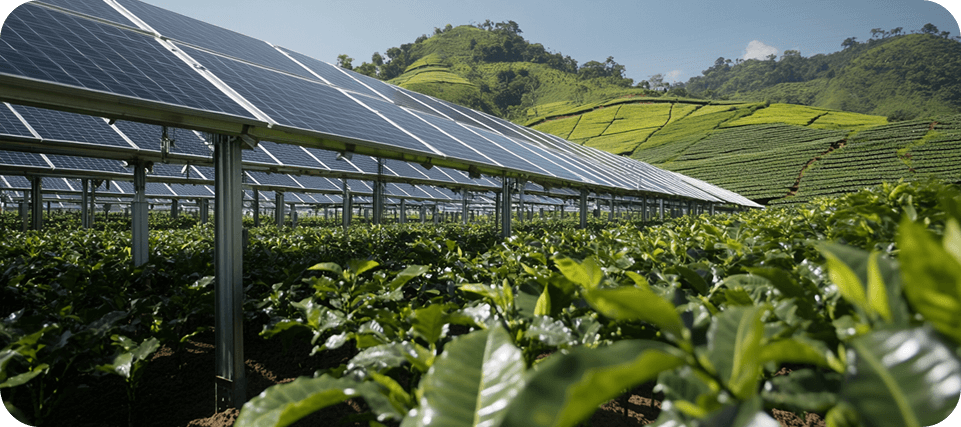
OxoTracker's web-based monitoring software manages single-axis solar tracking in Agri-PV settings in harmony with farm operations. Row spacing and crop height-based angle limits can be defined, and shading and irradiation balance are seasonally optimised.
Why Does Solar Tracker Efficiency Range From 15% to 45%?
Different sources quote solar tracking system gains anywhere from 15% to 45%. This is not inconsistency — it reflects system type and geography. Single-axis systems deliver 15–25% annual gain, while dual-axis systems reach 30–45%. The same system produces markedly higher gains in southeastern Turkey than along the Black Sea coast.
What Determines the Efficiency Gain?
- Number of axes: Single-axis tracks east-west motion; dual-axis adds seasonal elevation angle
- Latitude: At lower latitudes the sun's path is longer, so tracking gain is higher
- Direct normal irradiance (DNI): Tracking pays off most in regions with high clear-sky ratios
- Panel technology: Pairing bifacial modules with trackers yields additional gain
- Terrain slope and row spacing: Shading losses can cap the achievable tracking gain
OxoTracker is a single-axis system and delivers 15% to 25% higher annual production than fixed-tilt systems under Turkish conditions. This range is refined using irradiance data specific to your project location.
Should You Choose a Single-Axis or Dual-Axis Solar Tracker?
Single-axis systems are the standard choice for utility-scale solar projects. Dual-axis systems offer higher yield but require additional mechanical complexity, higher capital investment, and more frequent maintenance. Single-axis captures most of the dual-axis gain at substantially lower cost and failure risk.
| Single-Axis | Dual-Axis | |
|---|---|---|
| Annual efficiency gain | 15–25% | 30–45% |
| Moving parts | Few | More |
| Capital investment | Lower | Higher |
| Maintenance needs | Low | More frequent |
| Wind resilience | High | More sensitive |
| Best suited to | Mid and large-scale SPP | Small sites, high latitude |
What Are the Disadvantages of a Solar Tracking System?
A solar tracking system is not the right choice for every project. Compared to fixed-tilt, it involves higher upfront investment, moving mechanical components, and greater land requirements. Understanding these trade-offs upfront is essential to making a sound investment decision. Below are the genuine drawbacks — and how OxoTracker mitigates each.
Higher Upfront Capital Cost
Tracker systems require additional mechanical structure, motors, control units, and cabling compared to fixed mounting. This difference is recovered over the project lifetime through increased production, but it must be factored into first-year cash flow planning.
The OxoTracker approach: Plug & play installation and mobile app-assisted commissioning reduce field labour costs and installation time. Flexible financing options help distribute the upfront burden.
Moving Parts and Maintenance Requirements
A fixed system has no moving parts. Trackers involve motors, bearings, and fasteners that wear over time and require periodic inspection. In lower-quality systems, torque loss, bolt loosening, and motor failure are common problems.
The OxoTracker approach: The LockBolt connection system eliminates lifetime torque control. 24/7 remote monitoring detects faults without site visits, making maintenance planned rather than reactive and reducing unexpected downtime.
Greater Land Requirements
Because panels rotate throughout the day, wider row spacing is needed to prevent inter-row shading. This means more land for the same installed capacity compared to fixed systems — a meaningful factor where land costs are high.
The OxoTracker approach: Adaptability to varied terrain types and Agri-PV compatibility allow dual land use — on sites farmed beneath the array, land cost is not borne by the PV project alone.
Exposure to Severe Weather
A moving structure with large surface area experiences greater mechanical stress than a fixed system under high winds, hail, and snow loading. In inadequately engineered systems this can lead to structural damage.
The OxoTracker approach: Certified to IEC 62817 through static load, vibration, impact, and thermal deformation testing. Automatic stow positioning engages even during grid outages thanks to LiFePO4 battery backup, protecting your panels.
When Should You Not Choose a Solar Tracking System?
Fixed-tilt may be the better option for very small rooftop installations, constrained sites where land cost is exceptionally high, and persistently overcast regions with low direct irradiance. The decision should be made using site-specific irradiance data and a financial model. Our team provides this analysis free of charge during the quotation process.
Solar Tracking System — Frequently Asked Questions
How much more energy does a solar tracker produce compared to a fixed system?
The OxoTracker single-axis solar tracking system delivers 15% to 25% more annual energy production compared to fixed-tilt systems. Given Turkey's high solar irradiation, this difference can reach hundreds of MWh per year in large-scale solar power plants.
Does a solar tracker continue to operate in cloudy weather?
Yes. Since OxoTracker operates on an astronomical algorithm rather than sensor input, it is not dependent on direct sunlight. Even in overcast conditions, it calculates the sun's geometric position and maintains panels at the optimal angle to maximise available irradiation capture.
What project sizes is OxoTracker suitable for?
OxoTracker is suited to a wide power range — from small farm installations to large utility-scale Solar Power Plants. Its flexible design accommodates large-format modules and diverse terrain types, offering a suitable solution for investors at every scale.
Is a solar tracking system difficult or costly to maintain?
Because OxoTracker's LockBolt connection system requires no lifetime torque control, field maintenance costs are minimal. 24/7 remote monitoring enables fault detection and intervention without site visits.
What does IEC 62817 certification mean and why does it matter?
IEC 62817 is the internationally recognised independent testing and certification standard for solar tracking systems. OxoTracker became the first solar tracker in Turkey to receive this certification — a key compliance requirement sought by international project financiers and insurance companies.
How can I request a quote for OxoTracker?
Complete our quote form to get started. Select your project location on the map, enter your desired power output, and our team will contact you as soon as possible.
Field Applications


Choose OxoTracker for Your Solar Tracking System
As Turkey's only domestically developed solar tracking system certified to IEC 62817, OxoTracker helps you maximise energy production and secure your investment. Backed by METU-GÜNAM & TÜBİTAK R&D, more than a decade of sector experience, and internationally recognised certification — we are wherever the sun shines.